
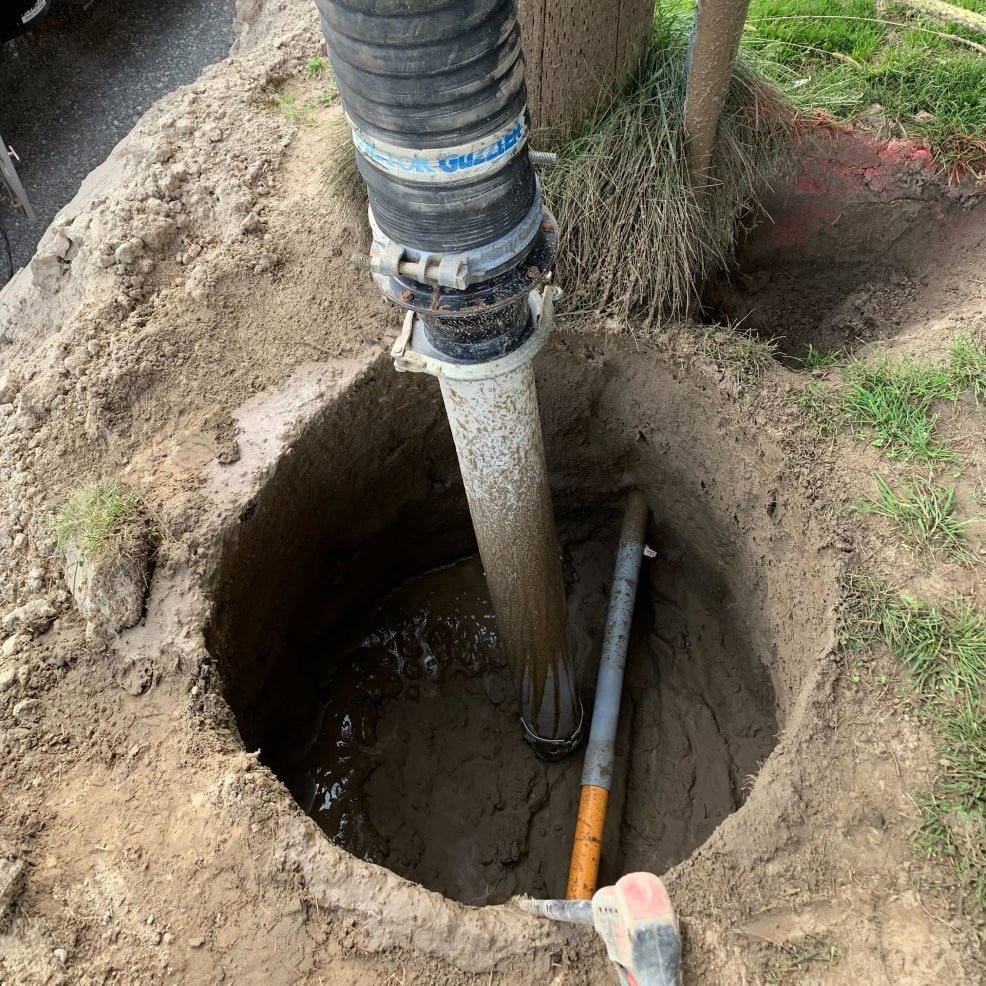
Utility potholing, also called utility daylighting, is the controlled exposure of a small section of an underground utility so its exact horizontal position and depth can be confirmed in the field. It is commonly used before boring, drilling, trenching, grading, excavation, and tie-in work where plan information or surface markings alone are not enough.
What does a utility pothole confirm?
Paint and flags identify the estimated path of a located utility, but the project team may still need a direct visual confirmation before work crosses or approaches that facility. A pothole can verify the utility’s actual depth, horizontal location, material, and relationship to nearby lines. Surveyors, inspectors, drill crews, and utility contractors can then work from field-verified information rather than assumptions.
OSHA’s excavation standard requires the estimated location of underground installations to be determined before excavation and states that the exact location must be established by safe and acceptable means as excavation approaches the marked facility. The current requirement is available in 29 CFR 1926.651.
How hydrovac potholing works
A hydrovac uses pressurized water to loosen soil while a vacuum system removes the resulting slurry. The operator works toward the marked target in a controlled excavation rather than opening a broad area with a mechanical bucket. The finished test hole is typically kept only as large as necessary to verify the utility and complete the required survey or inspection.
For a full description of the service, see utility potholing in Reno.
When is utility potholing useful?
Before horizontal directional drilling or boring
Proposed bore paths often cross existing gas, electric, communications, water, sewer, or other facilities. Potholes give the drilling crew verified crossing information before the bore reaches those locations.
Before trenching through an existing utility corridor
Where a new trench crosses established infrastructure, daylighting the known utilities can help the excavation and installation crews plan transitions and avoid relying only on record drawings. If the project also needs narrow controlled trench sections, hydrovac utility trenching may be part of the same mobilization.
Before grading or excavation near shallow facilities
Utility depth can matter when a project changes grade, removes pavement, installs drainage, or excavates near an existing line. A test hole can establish whether the planned work has enough separation or needs to be adjusted.
At tie-ins, valves, vaults, and congested crossings
Some of the most useful potholes are not isolated test holes at all. They are small controlled exposures at a tie-in or congested location where several utilities occupy the same area and the construction crew needs visibility before the next step.
What information should you provide before scheduling potholing?
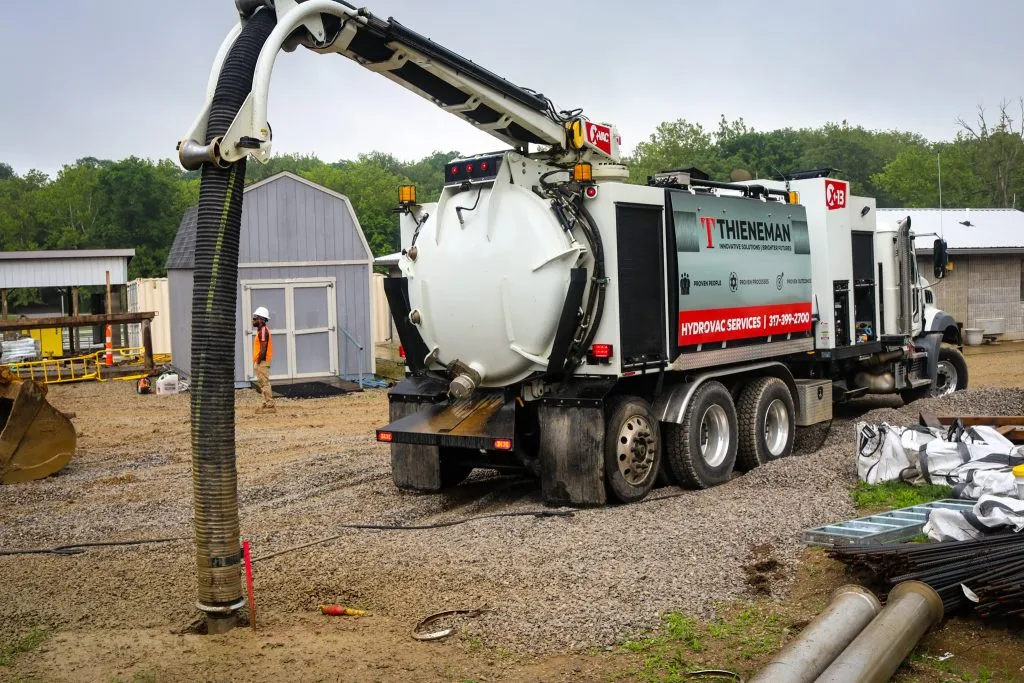
Have the required utility locating completed and identify each proposed pothole in the field or on a plan. If the project has several test points, number them. Include any required depth, approximate dimensions, survey objective, traffic-control needs, work-hour restrictions, and information about private utilities that may not be covered by public locating.
Photos showing the proposed truck position and work points are especially helpful on developed sites. Hose distance, gates, traffic, slopes, overhead clearance, and finished surfaces can affect how the crew reaches each target.
Public utility marks and private facilities
A standard utility-locate request may not identify every privately owned line on a property. Irrigation, private electrical feeds, site lighting, process lines, secondary services, and other owner-maintained facilities may require separate information or private locating. The project team should distinguish public marks from known private facilities before asking the hydrovac crew to expose a target.
What happens after the utility is exposed?
The pothole is usually one step in a larger workflow. A surveyor may record the utility elevation, an inspector may verify clearance, a bore crew may confirm its crossing profile, or an installation crew may adjust alignment. Before scheduling, decide whether the excavation needs to remain open temporarily, be backfilled immediately, or be restored by another contractor. That affects the required hole dimensions and how the work is sequenced.
It is also worth defining what counts as complete. Some projects only need the top of the facility visible. Others need enough exposure to identify the full outside diameter, material, or relationship to nearby utilities. Giving the operator that objective before digging avoids making a small hole twice.
What utility potholing does not replace
Potholing does not replace the required utility-locate process, engineering judgment, safe excavation practices, or project-specific permits and traffic control. It provides direct field information that helps those other parts of the project. The contractor or project owner remains responsible for the broader excavation plan and for determining what work can safely proceed after the utility is exposed.
Utility potholing vs. broad excavation
Potholing is intended to answer a specific question: where is the utility? It is not a substitute for every type of excavation. Once the facility has been positively exposed, the project may continue with mechanical equipment, hydro excavation, trenching, drilling, or another method appropriate for the remaining work.
Schedule utility potholing in Reno
Reno Hydrovac provides potholing and daylighting for contractors, utilities, commercial sites, and infrastructure projects throughout Reno and Northern Nevada. To discuss a set of test holes, request a free estimate or call (775) 414-4960.