
CULVERT CLEANING RENO, NV
Culvert Cleaning in Reno, NV
Culvert cleaning for road crossings, site drainage, ditches, and private infrastructure where sediment and debris are reducing usable flow area.
- Licensed & Insured
- Locally Owned
- Serving Since 2016
Get Your Free Quote
By submitting this form, you agree to our Terms of Use including consent to receive calls regarding your free estimate.
Confidential · We respond within one business day
Home › Culvert Cleaning
The purpose of culvert cleaning is specific: restores cross-sectional area by removing material that has accumulated at the inlet, inside the barrel, or at the outlet. At the same time, the service can address sediment, gravel, leaves, trash, and other movable debris when the culvert itself remains structurally serviceable and often combines vacuum removal at accessible ends with high-pressure water to mobilize deposits inside the pipe. Reno Hydrovac uses that capability for planned construction, utility, drainage, and facility work across the Reno area.
Typical scopes include private road culverts, commercial and industrial site crossings, driveway or access-road drainage, construction-site culverts, ditch crossings, culverts that repeatedly collect sediment at one end. The work may connect directly with storm drain cleaning, vacuum truck services, or high-pressure line cleaning. We treat each part of the scope separately so the field crew knows the intended result and the customer can see what is included in the estimate.
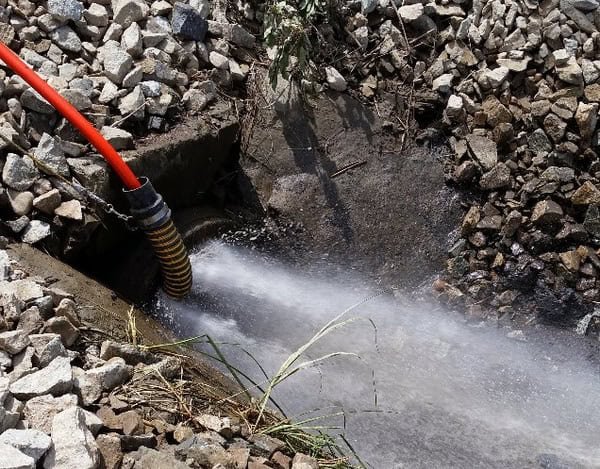
Culvert Cleaning for Roads, Sites, and Drainage Corridors
A good culvert cleaning plan starts with the material restricting flow and the condition that needs to be restored. Depending on access and buildup, the work may combine vacuum removal at an accessible end with high-pressure water to mobilize deposits inside the pipe. Photos, culvert dimensions, and a description of the problem are usually more useful than simply requesting a truck for a set number of hours.
Common projects include private road culverts, commercial and industrial site crossings, driveway or access-road drainage, construction-site culverts, ditch crossings, and culverts that repeatedly collect sediment at one end. Some are routine maintenance calls, while others involve active flow, buried infrastructure, difficult access, or unknown buildup that should be discussed before work starts.
Cleaning an accessible driveway culvert is a different task from working on a longer crossing with heavy sediment or limited truck access. Hose routing, water use, recovery volume, culvert diameter, material condition, and disposal all affect production. We define the accessible work points and expected result before estimating the job.
Removing Sediment, Gravel, Trash, and Organic Debris
The crew will normally inspect both ends and identify the likely restriction, then remove bulk material at the inlet or outlet before driving it into the barrel. Once the setup is correct, the operator can jet or flush internal deposits toward a controlled recovery point. We continue by vacuum loosened material where access permits, and finish by making sure we recheck the barrel and adjacent ditch so the cleaned culvert has a usable path for water to enter and leave. Working in stages gives the operator a chance to react to changing material or unexpected infrastructure instead of committing to an aggressive pass too early.
Coordination is particularly important when inspectors, surveyors, pipelayers, drillers, electricians, or repair crews are waiting on the hydrovac work. We want the completed task to be useful to the next person, not simply technically finished.
Quality control during the work is mostly about staying aligned with the target. The operator should be able to pause after jet or flush internal deposits toward a controlled recovery point and confirm whether the excavation or cleaning is progressing as expected before continuing to vacuum loosened material where access permits. If conditions reveal an unknown utility, structural defect, unsuitable material, or a different problem than the one described, the sensible next step is to stop and discuss it rather than turn a defined scope into uncontrolled extra work.
Jetting and Vacuum Work From the Inlet and Outlet
Site conditions can change the method. Culvert work is affected by pipe size, length, slope, bends, headwalls, standing water, traffic, and the ability to reach both ends. High-desert runoff can move surprising amounts of sediment during short storms, while roadside sanding and construction can add material over time. A crushed, separated, or badly damaged culvert may need repair rather than repeated cleaning. These factors also influence how much water, hose, staging room, and disposal capacity are needed.
An official reference related to this work is EPA stormwater maintenance guidance. The project-specific rules still come first, including utility locates, excavation protection, traffic control, environmental requirements, facility procedures, and any local permits.
Reno-area conditions can also change during the day. Culvert work is affected by pipe size, length, slope, bends, headwalls, standing water, traffic, and the ability to reach both ends. A site that is dry and open during estimating may have parked equipment, deliveries, snow, standing water, or active traffic when the truck arrives. The site contact should keep the planned staging area available and let us know about changes that affect safe access. That small amount of coordination can save substantial setup time.
Access, Flow Conditions, and Protecting the Downstream System
The estimate is driven by culvert diameter and length, amount and density of material, access to one or both ends, jetting time, vacuum recovery, traffic control, disposal volume. We do not assume that two similarly named jobs will take the same time. A clean, accessible structure near the truck is different from a deep or remote work point with dense material and a long hose run.
If you are budgeting a project before the site is ready, send the available plan sheets and quantities. We can identify which assumptions are reasonable for estimating and which items should remain allowances until field conditions are known.
When comparing estimates, look at what is included. Culvert diameter and length, amount and density of material, and disposal volume may be handled differently from one project to another. An estimate that includes vacuum recovery and disposal is not directly comparable to one that assumes the customer will handle material after it is loosened. We try to state those assumptions so the project team can budget the whole task rather than only the truck at the curb.
Culvert Cleaning Cost and Preventive Maintenance
To prepare, clear vegetation or stored materials that block safe access; identify downstream property or drainage structures; coordinate road or driveway access if hoses cross traveled areas; schedule cleaning before major site work when the culvert will carry construction runoff; and inspect periodically so sediment is removed before the barrel becomes heavily restricted. These are small steps, but they reduce waiting and make it easier to coordinate the truck with the rest of the project.
Reno Hydrovac provides free estimates for culvert cleaning throughout Reno and the surrounding service area. Call (775) 414-4960 with the project location and scope to get started.
For multiple culverts or drainage crossings, identify each structure and note access from both ends where possible. That helps the crew plan hose placement, sediment recovery, and traffic or driveway coordination before cleaning begins.
Related Culvert Cleaning Services and Next Steps
Culvert Cleaning is often one part of a larger project. Depending on what is uncovered or cleaned, the next step may involve storm drain cleaning, vacuum truck services, or high-pressure line cleaning. We can coordinate the hydrovac portion with the contractor or facility team so each service has a clear purpose instead of duplicating work.
If you are not sure which service name fits the problem, describe the site and desired outcome rather than guessing. Call (775) 414-4960 or request a free estimate. We can determine whether the work is primarily excavation, utility verification, vacuum removal, jetting, or infrastructure cleaning and scope it accordingly.
Frequently Asked Questions About Culvert Cleaning
What causes culverts to lose flow capacity?
Sediment, soil, leaves, vegetation, trash, roadway debris, and material washed in during storms can accumulate at culvert entrances, outlets, or inside the barrel. In some cases the apparent blockage is structural, so cleaning may expose damage that requires repair rather than additional jetting or vacuum work.
Can you clean both the inside of a culvert and the inlet area?
When access and conditions allow, the scope can include bulk material removal around the inlet or outlet plus cleaning within the culvert. The best method depends on culvert diameter, length, material, slope, access, and the type of debris restricting flow.
What information is useful for a culvert cleaning quote?
Provide the culvert location, diameter or dimensions, approximate length, inlet and outlet photos, access conditions, and an estimate of the material present. Note standing water, steep slopes, traffic exposure, or limited shoulder access because those conditions can affect truck placement and work planning.
Is culvert cleaning part of storm drain maintenance?
Culverts and storm drains both move runoff, but they often have different access and maintenance conditions. A property or infrastructure project may need both. For connected structures, inlets, and buried drainage pipe, see our storm drain cleaning service.