
UTILITY POTHOLING RENO, NV
Utility Potholing in Reno, NV
Hydrovac potholing to positively expose marked utilities before boring, trenching, drilling, grading, and mechanical excavation in Reno and Northern Nevada.
- Licensed & Insured
- Locally Owned
- Serving Since 2016
Get Your Free Quote
By submitting this form, you agree to our Terms of Use including consent to receive calls regarding your free estimate.
Confidential · We respond within one business day
Home › Utility Potholing
When a Reno project calls for utility potholing, the important question is what the work must accomplish. Creates a small targeted excavation over a marked underground facility so crews can see its actual position and depth; it also provides field verification that paint and flags alone cannot provide and helps project teams plan crossings, elevations, offsets, and equipment clearances before higher-risk work begins. Reno Hydrovac scopes the service around that result instead of treating every request as the same truck-hours job.
We commonly support test holes along proposed bore paths, daylighting gas, electric, water, sewer, and communications lines, verification at utility crossings, depth checks before grading or trenching. Other assignments include exposure near tie-ins, valves, vaults, and existing structures. Related work can involve hydro excavation, utility trenching, or vacuum excavation. Giving us the project drawings, access information, and the reason the work is being performed helps us recommend the right sequence.
Potholing for Positive Utility Identification
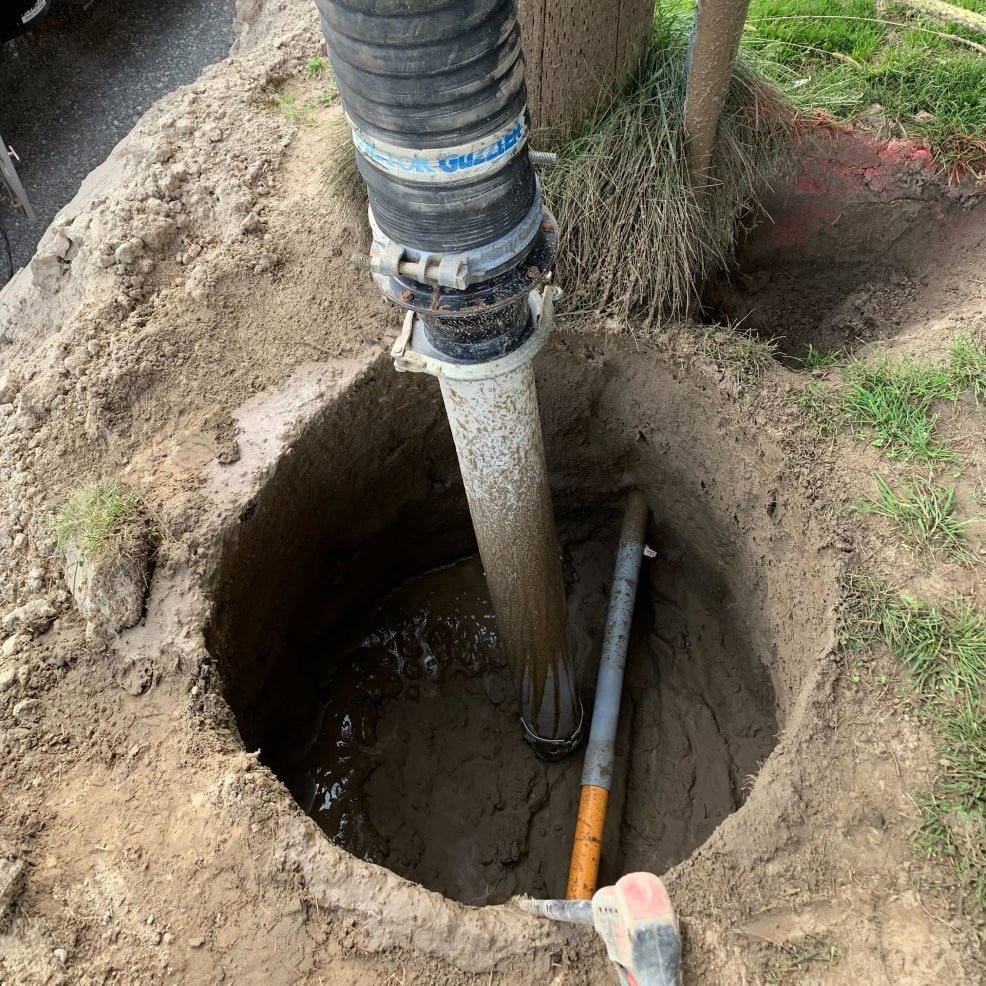
Utility potholing is about field verification, not bulk excavation. It gives the project team a direct view of a marked utility so depth and horizontal position can be confirmed before drilling, boring, grading, trenching, or other excavation begins. That control is especially useful on active jobsites where traffic, finished surfaces, other utilities, or facility operations limit where equipment can work.
Typical requests include test holes along proposed bore paths, daylighting gas, electric, water, sewer, and communications lines, verification at utility crossings, depth checks before grading or trenching, and exposure near tie-ins, valves, vaults, and existing structures. The best candidate is a job where the target can be clearly defined and exposed in stages without opening a larger area than necessary.
Production can vary considerably between a straight row of test holes and a congested tie-in or vault. The number of work points, surface conditions, traffic control, hose distance, and the required finished dimensions all affect how quickly the crew can verify each utility.
Creating a Useful Test Hole Without Over-Excavating
A typical setup begins by making the work area understandable to the operator. The crew will start from the locate marks and the project team’s requested test-hole location, remove soil gradually while maintaining a narrow excavation, and slow the excavation as the expected utility elevation is approached. As work continues, we expose enough of the facility to verify depth, alignment, material, or crossing conditions. Before leaving the task, we document or measure the exposed utility before the hole is protected or restored by the responsible crew. The sequence can be adjusted for access, active flow, or the next contractor, but the objective remains controlled progress with the work visible and manageable.
Hydrovac and combination-truck work is most efficient when access points are ready, the target is marked, and the operator is not waiting for basic decisions in the field. Complex sites may need a pre-job conversation with the superintendent, utility representative, facility contact, or inspector.
Quality control during the work is mostly about staying aligned with the target. The operator should be able to pause after slow the excavation as the expected utility elevation is approached and confirm whether the excavation or cleaning is progressing as expected before continuing to expose enough of the facility to verify depth, alignment, material, or crossing conditions. If conditions reveal an unknown utility, structural defect, unsuitable material, or a different problem than the one described, the sensible next step is to stop and discuss it rather than turn a defined scope into uncontrolled extra work.
Potholing Before Boring, Drilling, and Trenching
Reno and the Truckee Meadows create a wide range of operating conditions. Developed reno streets can contain multiple generations of utilities at different depths and offsets. In addition, commercial properties may have private lines that are not covered by a public locate ticket. Pavement, landscaping, traffic, fencing, and limited truck staging can matter as much as soil type. A service that works well in an open yard may need a different hose route, truck position, or work window downtown or beside an active roadway.
For background on the safety or maintenance principles related to this work, see OSHA excavation requirements for underground installations. That resource does not replace project-specific requirements. The controlling contractor or facility owner should still confirm permits, locates, traffic control, confined-space rules, protective systems, environmental requirements, and disposal obligations.
Reno-area conditions can also change during the day. Developed reno streets can contain multiple generations of utilities at different depths and offsets. A site that is dry and open during estimating may have parked equipment, deliveries, snow, standing water, or active traffic when the truck arrives. The site contact should keep the planned staging area available and let us know about changes that affect safe access. That small amount of coordination can save substantial setup time.
Working in Congested Reno Utility Corridors
Pricing is influenced by number of potholes, expected depth and diameter, soil or fill conditions, distance between test holes, truck setup and hose routing, surface restoration handled by others, material disposal. The most useful estimate therefore comes from a defined scope rather than only a service name. We may ask how many structures or excavations are involved, how far the truck can park from the work, what material is expected, and where recovered material can legally go.
Bundling nearby work can sometimes reduce setup time, but it only makes sense when the sites or work points can be handled efficiently in the same mobilization. If different locations have different access, disposal, or traffic requirements, they may need separate planning.
When comparing estimates, look at what is included. Number of potholes, expected depth and diameter, and material disposal may be handled differently from one project to another. An estimate that includes vacuum recovery and disposal is not directly comparable to one that assumes the customer will handle material after it is loosened. We try to state those assumptions so the project team can budget the whole task rather than only the truck at the curb.
Potholing Cost, Scheduling, and Field Preparation
Before scheduling, obtain the required utility locate ticket. Next, identify each pothole location in the field. Also separate public utility marks from known private facilities. When applicable, coordinate traffic or pedestrian control when holes are in active areas; finally, tell us if the holes need specific dimensions for survey, design, or inspection. Good preparation protects the schedule and gives the field crew a clear definition of done.
For a free estimate, call (775) 414-4960. We will ask a few practical questions about the Reno-area project, review the requested utility potholing scope, and coordinate timing around the work that has to happen before and after the hydrovac truck.
For several potholes, number each test point on a plan or in the field and note any required depth, dimensions, or survey objective. That gives the operator a clear sequence and helps the project team confirm each utility exposure before work continues.
Related Utility Potholing Services and Next Steps
Utility Potholing is often one part of a larger project. Depending on what is uncovered or cleaned, the next step may involve hydro excavation, utility trenching, or vacuum excavation. We can coordinate the hydrovac portion with the contractor or facility team so each service has a clear purpose instead of duplicating work.
If you are not sure which service name fits the problem, describe the site and desired outcome rather than guessing. Call (775) 414-4960 or request a free estimate. We can determine whether the work is primarily excavation, utility verification, vacuum removal, jetting, or infrastructure cleaning and scope it accordingly.
Frequently Asked Questions About Utility Potholing
What is utility potholing or daylighting?
Utility potholing, also called daylighting, is the controlled exposure of a marked underground facility so its actual horizontal position and depth can be confirmed. The opening gives contractors, surveyors, drillers, and utility crews a physical reference before boring, trenching, grading, or other excavation continues.
How large does a utility pothole need to be?
The opening should be large enough to safely expose and identify the target without creating more disturbance than the project requires. Dimensions vary with utility depth, soil conditions, the number of facilities in the area, and what the project team needs to measure or inspect. We scope the excavation around the actual verification objective.
Can several utilities be exposed during one mobilization?
Yes. When multiple test holes are ready and reasonably grouped, they can often be scheduled together. Providing a marked-up plan with the test-hole sequence, expected depths, and access notes helps reduce unnecessary repositioning and makes the field scope easier to estimate.
Does potholing replace an 811 utility locate?
No. Potholing is a physical verification step, not a substitute for required utility locating. The controlling contractor should complete the appropriate locate process and identify private utilities when applicable before the crew arrives. Once marked, hydro excavation can be used to expose the facility carefully.