CATCH BASIN CLEANING RENO, NV
Catch Basin Cleaning in Reno, NV
Catch basin cleaning to remove accumulated sediment, trash, leaves, and debris before it reduces storage capacity or moves into downstream storm piping.
- Licensed & Insured
- Locally Owned
- Serving Since 2016
Get Your Free Quote
By submitting this form, you agree to our Terms of Use including consent to receive calls regarding your free estimate.
Confidential · We respond within one business day
Home › Catch Basin Cleaning
When a Reno project calls for catch basin cleaning, the important question is what the work must accomplish. Focuses on the sump area below a drainage inlet where heavier material is intended to settle; it also removes accumulated solids before they fill the structure or are carried into downstream piping and is a practical maintenance service for commercial properties, industrial yards, private roads, and construction sites. Reno Hydrovac scopes the service around that result instead of treating every request as the same truck-hours job.
We commonly support parking lot catch basins, storm drain inlets with sumps, industrial yard drainage structures, private roadway systems. Other assignments include construction sediment controls after approval for removal, structures upstream of storm piping that repeatedly collect debris. Related work can involve storm drain cleaning, commercial drain cleaning, or vacuum truck services. Giving us the project drawings, access information, and the reason the work is being performed helps us recommend the right sequence.
Catch Basin Cleaning for Parking Lots and Drainage Systems
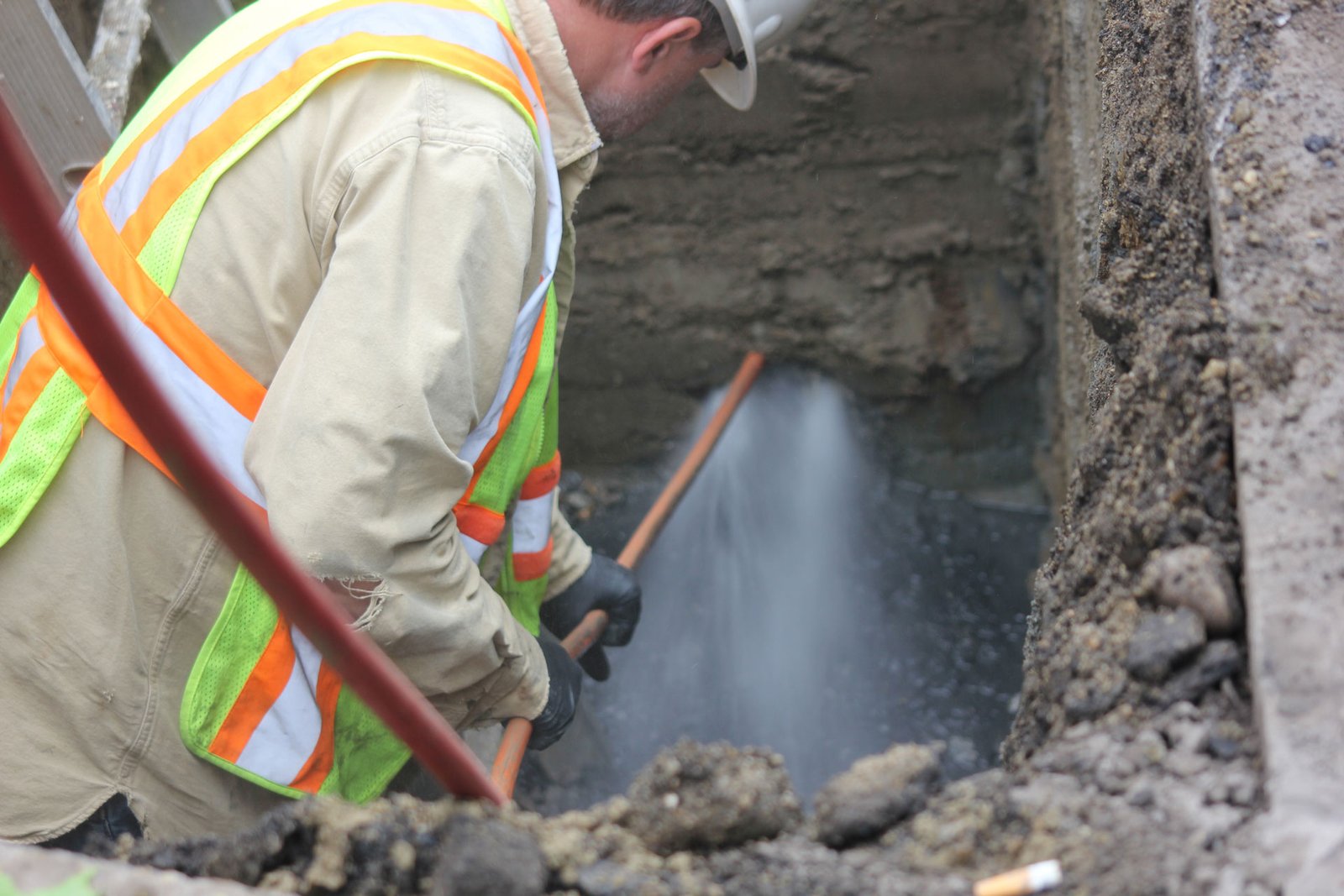
Catch basin cleaning removes accumulated solids before they fill the structure or are carried into downstream piping. Vacuum recovery allows sediment, leaves, trash, and other suitable debris to be removed from the basin rather than pushed farther through the drainage system. This is useful for routine maintenance as well as construction and facility cleanup.
Typical projects include parking lot catch basins, storm drain inlets with sumps, industrial yard drainage structures, private roadway systems, approved construction sediment controls, and structures upstream of storm piping that repeatedly collect debris. The best scope identifies the affected basins, access conditions, expected material, and whether connected piping also needs cleaning.
A single parking lot basin is a different task from cleaning multiple drainage structures across an industrial or commercial site. Truck placement, hose routing, recovery volume, traffic or parking control, disposal, and the amount of material in each structure can all affect production. We define the work points and expected result before estimating the job.
Why Sediment Collects Below the Outlet
A typical setup begins by making the work area understandable to the operator. The crew will remove the grate or access cover safely, vacuum standing water and loose debris as needed to reach the sediment layer, and remove accumulated solids from the sump. As work continues, we inspect the outlet and inlet openings for obvious blockage. Before leaving the task, we jet connected pipe when the problem extends beyond the basin and the system configuration allows it. The sequence can be adjusted for access, active flow, or the next contractor, but the objective remains controlled progress with the work visible and manageable.
Hydrovac and combination-truck work is most efficient when access points are ready, the target is marked, and the operator is not waiting for basic decisions in the field. Complex sites may need a pre-job conversation with the superintendent, utility representative, facility contact, or inspector.
Quality control during the work is mostly about staying aligned with the target. The operator should be able to pause after remove accumulated solids from the sump and confirm whether the excavation or cleaning is progressing as expected before continuing to inspect the outlet and inlet openings for obvious blockage. If conditions reveal an unknown utility, structural defect, unsuitable material, or a different problem than the one described, the sensible next step is to stop and discuss it rather than turn a defined scope into uncontrolled extra work.
Vacuum Removal Before Jetting the Connected Line
Reno and the Truckee Meadows create a wide range of operating conditions. Catch basins in reno can accumulate sand, road grit, leaves, trash, landscape material, and construction sediment. In addition, structures in active parking areas may require cones, temporary closures, or off-peak scheduling. Cleaning should avoid pushing collected solids farther downstream when vacuum recovery is available. A service that works well in an open yard may need a different hose route, truck position, or work window downtown or beside an active roadway.
For background on the safety or maintenance principles related to this work, see EPA stormwater maintenance guidance for catch basins. That resource does not replace project-specific requirements. The controlling contractor or facility owner should still confirm permits, locates, traffic control, confined-space rules, protective systems, environmental requirements, and disposal obligations.
Reno-area conditions can also change during the day. Catch basins in reno can accumulate sand, road grit, leaves, trash, landscape material, and construction sediment. A site that is dry and open during estimating may have parked equipment, deliveries, snow, standing water, or active traffic when the truck arrives. The site contact should keep the planned staging area available and let us know about changes that affect safe access. That small amount of coordination can save substantial setup time.
Inspection, Access, and Preventive Cleaning
Pricing is influenced by number and size of basins, sediment depth, access under grates or covers, vacuum volume, need for connected-line jetting, traffic control, disposal requirements. The most useful estimate therefore comes from a defined scope rather than only a service name. We may ask how many structures or excavations are involved, how far the truck can park from the work, what material is expected, and where recovered material can legally go.
Bundling nearby work can sometimes reduce setup time, but it only makes sense when the sites or work points can be handled efficiently in the same mobilization. If different locations have different access, disposal, or traffic requirements, they may need separate planning.
When comparing estimates, look at what is included. Number and size of basins, sediment depth, and disposal requirements may be handled differently from one project to another. An estimate that includes vacuum recovery and disposal is not directly comparable to one that assumes the customer will handle material after it is loosened. We try to state those assumptions so the project team can budget the whole task rather than only the truck at the curb.
Catch Basin Cleaning Cost and Service Frequency
Before scheduling, identify all basins to be included rather than only the visibly clogged one. Next, move parked vehicles away from structures. Also share site drainage drawings when available. When applicable, schedule after heavy construction activity or before periods when reliable drainage is especially important; finally, keep a maintenance record so future cleaning frequency can be based on actual accumulation. Good preparation protects the schedule and gives the field crew a clear definition of done.
For a free estimate, call (775) 414-4960. We will ask a few practical questions about the Reno-area project, review the requested catch basin cleaning scope, and coordinate timing around the work that has to happen before and after the hydrovac truck.
For sites with multiple catch basins, number the structures on a drainage plan or simple sketch. That makes the cleaning scope easy to verify and creates a useful reference for comparing sediment accumulation during future maintenance.
Related Catch Basin Cleaning Services and Next Steps
Catch Basin Cleaning is often one part of a larger project. Depending on what is uncovered or cleaned, the next step may involve storm drain cleaning, commercial drain cleaning, or vacuum truck services. We can coordinate the hydrovac portion with the contractor or facility team so each service has a clear purpose instead of duplicating work.
If you are not sure which service name fits the problem, describe the site and desired outcome rather than guessing. Call (775) 414-4960 or request a free estimate. We can determine whether the work is primarily excavation, utility verification, vacuum removal, jetting, or infrastructure cleaning and scope it accordingly.
Frequently Asked Questions About Catch Basin Cleaning
How do I know when a catch basin needs cleaning?
Visible sediment near the outlet, reduced storage volume, standing debris, frequent ponding, or routine maintenance inspections can all indicate that a basin should be cleaned. Waiting until a structure is completely full can allow material to move into connecting pipe and make the overall drainage problem more difficult to address.
What material is typically removed from catch basins?
Common material includes sediment, sand, leaves, trash, landscaping debris, and other solids carried by runoff. Construction sites can also accumulate aggregate and soil. The material should be identified as well as possible before disposal, especially if the basin receives runoff from an industrial or unusual source.
Does cleaning the basin also clean the connected storm pipe?
Not automatically. Removing material from the structure restores basin capacity, but sediment or blockage may also be present in the connected line. If line cleaning is needed, it can be scoped separately or combined with storm drain cleaning when access allows.
Can multiple catch basins be cleaned in one visit?
Yes. A site plan showing structure locations, access, and known problem areas makes multi-basin work easier to sequence. Grouping structures by parking area, drainage run, or project phase can reduce unnecessary truck movement and help the owner document what was serviced.