
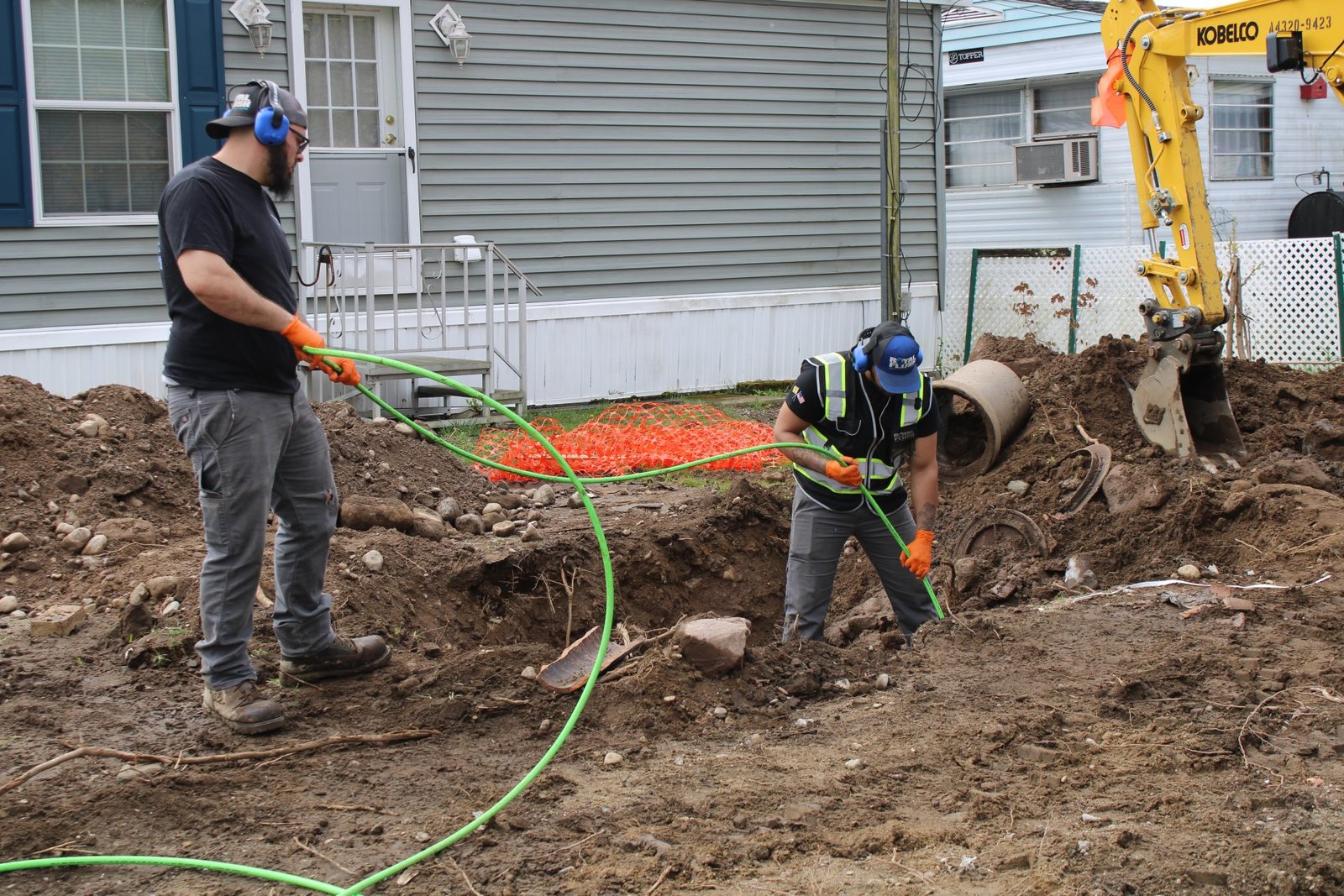
The choice between hydrovac vs mechanical excavation is not simply a question of which method is better. Excavators are extremely productive for bulk earthmoving and open trenching. Hydrovac equipment is useful when the job calls for controlled digging, utility visibility, a smaller excavation footprint, or vacuum recovery. Many construction projects use both methods at different stages.
Where hydrovac has an advantage
Exposing marked utilities
When a crew needs to determine the exact location of a buried facility, a broad mechanical excavation can be unnecessary. Hydrovac can create a controlled test hole or exposure so the utility can be seen and measured before the next phase of work. This is the basis of utility potholing.
Working in congested utility corridors
Existing gas, electric, communications, water, sewer, and drainage facilities can occupy a surprisingly small area. A hydrovac operator can work incrementally and recover loosened material as the excavation progresses, which gives the crew better visibility than a bucket working through an uncertain crossing.
Restricted-access excavation
The truck does not always need to sit directly beside the hole. Vacuum hose can reach work points behind gates, around structures, or in areas where placing a larger excavator is impractical. The tradeoff is that longer hose runs and difficult staging can reduce production.
Small controlled trench sections
Hydrovac can be useful for short slot trenches, utility crossings, and localized trench sections where precision matters more than bulk production. See our utility trenching service for examples.
Where mechanical excavation usually has the advantage
Bulk earthmoving
If a project needs a large volume of ordinary material removed from an open work area, an excavator is often the more productive tool. Hydrovac is not intended to replace conventional equipment for every trench, foundation, or mass-excavation scope.
Long open trenches after utilities are verified
A common sequence is to use potholing or hydro excavation to expose crossings and uncertain utilities, then use mechanical equipment for the bulk of an open trench once the risks are understood. This can combine controlled utility verification with efficient production.
Projects where slurry recovery adds no value
Hydrovac excavation requires vacuum recovery and debris management. On an open site where material can be excavated, stockpiled, and reused easily, mechanical equipment may avoid unnecessary water use and disposal.
What actually determines the right method?
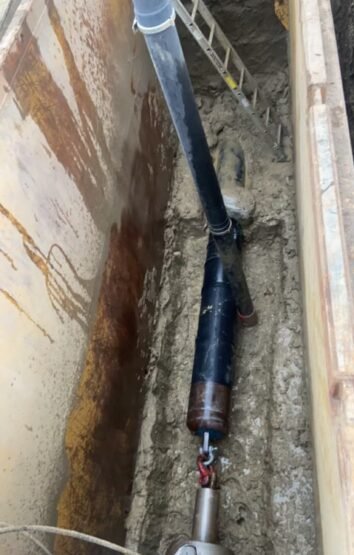
The decision should consider the purpose of the excavation, known and marked utilities, required dimensions, ground conditions, access, traffic control, surface restoration, schedule, material handling, and what work follows immediately afterward. A six-inch verification hole and a 200-foot open trench are fundamentally different jobs even if both are part of the same utility project.
Federal excavation requirements are also relevant when underground installations may be encountered. OSHA requires estimated utility locations to be determined before excavation and exact locations to be established by safe and acceptable means as work approaches those facilities. See OSHA 29 CFR 1926.651.
Hydrovac vs mechanical excavation at a glance
| Project factor | Hydrovac | Mechanical excavation |
|---|---|---|
| Utility verification | Well suited to small controlled exposures and potholes | Better after utility locations and clearances are understood |
| Bulk production | Usually slower for large open volumes | Typically more productive for mass excavation and long open trenches |
| Restricted access | Can work through hose from a remote truck position | Requires physical equipment access to the excavation |
| Material handling | Recovers loosened material into the debris tank | Excavated material can often be stockpiled or loaded directly |
| Excavation footprint | Useful where a smaller targeted opening is preferred | Efficient where a larger work area is acceptable |
Schedule and cost are part of the method choice
Hydrovac can reduce the amount of open excavation around a specific utility, but it adds water, vacuum recovery, and debris-management requirements. Mechanical equipment can move ordinary soil quickly, but may require a larger work zone and more room for spoils. The right comparison is the total project sequence, not only the hourly rate of one machine.
For example, using hydrovac to verify several crossings before a trenching crew mobilizes may prevent the excavator from waiting while utility elevations are confirmed. On another site, using hydrovac for the full length of an open trench would add time without providing enough additional benefit. The best method is the one that solves the actual field constraint.
Surface conditions and restoration
Finished pavement, landscaping, sidewalks, and occupied facilities can influence the decision because access and restoration may matter as much as digging speed. Hydrovac can keep the initial opening targeted, while mechanical excavation may be more appropriate once a larger area is already scheduled for removal and replacement. Neither method eliminates the need to plan backfill and restoration.
Can hydrovac and an excavator work on the same project?
Yes. In many cases that is the most practical approach. Hydrovac can expose crossings, daylight utilities, excavate around a tie-in, or create a controlled transition. Mechanical equipment can then handle open excavation where conditions allow. The methods are complementary when each is used for the part of the project it handles best.
If the project requires controlled digging or vacuum recovery, review our hydro excavation services and vacuum excavation.
Discuss the excavation scope
If you are deciding between potholing, hydro excavation, vacuum excavation, trenching, or conventional excavation around utilities, send the project details rather than guessing from the service name. Contact Reno Hydrovac or call (775) 414-4960 for a free estimate on the hydrovac portion of the work.