
VACUUM EXCAVATION RENO, NV
Vacuum Excavation in Reno, NV
Controlled vacuum excavation for removing loosened soil, aggregate, sediment, and debris from tight or sensitive work areas throughout Reno and Northern Nevada.
- Licensed & Insured
- Locally Owned
- Serving Since 2016
Get Your Free Quote
By submitting this form, you agree to our Terms of Use including consent to receive calls regarding your free estimate.
Confidential · We respond within one business day
Home › Vacuum Excavation
Reno Hydrovac handles vacuum excavation as a construction and infrastructure service, not as a generic one-line item. The method uses high-airflow vacuum equipment to lift loosened material from an excavation or structure, while can reduce the need to place conventional excavation equipment directly beside the work. Just as important, it is useful where access is narrow, existing facilities limit digging room, or the project needs controlled removal rather than broad earthmoving. That combination makes the service useful when the project has a specific target, limited access, or a need to keep material contained.
Requests range from excavation around utilities and structures, removal from pits, vaults, sumps, and access points, cleanup of loose soil and aggregate in restricted areas to support for hydro excavation and potholing, material removal where a long hose reach is more practical than bringing an excavator to the opening. Depending on the scope, the same mobilization may also include hydro excavation, vacuum truck services, or catch basin cleaning. We separate those tasks in the estimate so the customer understands what is actually being performed.
Vacuum Excavation for Restricted and Sensitive Work Areas
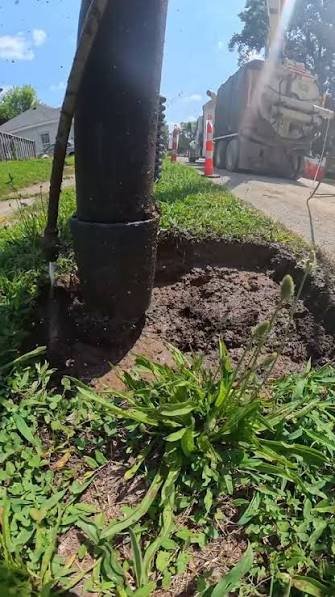
Vacuum excavation is useful where material needs to be removed from a defined area without bringing large mechanical equipment directly to the opening. High-airflow vacuum equipment can recover loosened soil, slurry, sediment, aggregate, and other suitable material while keeping the work footprint relatively compact. This is particularly useful around utilities, structures, finished surfaces, and restricted-access areas.
Typical applications include excavation around utilities and structures, removal from pits, vaults, sumps, and access points, cleanup of loose soil and aggregate in restricted areas, support for hydro excavation and potholing, and material removal where a long hose reach is more practical than positioning an excavator at the opening. Some jobs are stand-alone removal projects, while others support a larger utility, civil, paving, drainage, or facility scope.
Vacuum excavation production depends heavily on where the truck can stage and what material is being recovered. An accessible pit with loose material may move quickly, while a long hose run, wet slurry, compacted material, or utility congestion can require a different setup and more recovery time.
Wet and Dry Material Removal With a Vacuum Truck
Field work generally follows a deliberate sequence. First we evaluate the material and confirm that it is appropriate for the equipment and disposal plan. The truck is then set up so we can select a truck position that keeps hose routing practical and minimizes interference with the site. The operator loosen or expose material as needed before vacuuming, followed by remove material in controlled stages so buried structures remain visible. Once the target condition is reached, we contain recovered material in the debris body for transport to the approved destination.
The process may sound straightforward, but efficiency depends on details such as hose routing, water supply, line access, material consistency, safe staging, and communication with the other crews. Those are the details we try to resolve before the truck is committed.
Quality control during the work is mostly about staying aligned with the target. The operator should be able to pause after loosen or expose material as needed before vacuuming and confirm whether the excavation or cleaning is progressing as expected before continuing to remove material in controlled stages so buried structures remain visible. If conditions reveal an unknown utility, structural defect, unsuitable material, or a different problem than the one described, the sensible next step is to stop and discuss it rather than turn a defined scope into uncontrolled extra work.
Excavating Around Existing Infrastructure
Vacuum performance changes with hose length, vertical lift, material density, moisture, and particle size. Tight reno commercial sites may require the truck to remain outside the immediate work zone while hoses reach the excavation. Unknown liquids or potentially hazardous material require characterization and a disposal plan before work is scheduled. These Reno-area conditions can affect production even when the actual excavation or cleaning target is small.
We also plan around the applicable safety and maintenance requirements. OSHA interpretation addressing hydro-vacuum excavation is a useful official reference for this type of work. It should be read together with the project plans, local permit conditions, utility requirements, and the controlling contractor’s safety program.
Reno-area conditions can also change during the day. Vacuum performance changes with hose length, vertical lift, material density, moisture, and particle size. A site that is dry and open during estimating may have parked equipment, deliveries, snow, standing water, or active traffic when the truck arrives. The site contact should keep the planned staging area available and let us know about changes that affect safe access. That small amount of coordination can save substantial setup time.
Access, Hose Distance, and Material Handling
A quote for vacuum excavation considers truck time, hose distance and vertical lift, material type and moisture, volume to be removed, access and setup time, disposal location and dump fees, and whether water or hydro excavation is also needed. The service is therefore difficult to price accurately from a single photo or a line like ‘one hole’ or ‘one drain’ without dimensions and access information.
We can usually narrow the estimate quickly when the caller has measurements, site photos, utility marks, line maps, or a plan sheet. If the scope is uncertain because the problem is underground, we can define an initial task and explain what conditions would justify additional work.
When comparing estimates, look at what is included. Truck time, hose distance and vertical lift, and whether water or hydro excavation is also needed may be handled differently from one project to another. An estimate that includes vacuum recovery and disposal is not directly comparable to one that assumes the customer will handle material after it is loosened. We try to state those assumptions so the project team can budget the whole task rather than only the truck at the curb.
Vacuum Excavation Cost and Jobsite Planning
Preparation is simple but important: describe the material as accurately as possible; estimate volume, depth, and access dimensions; identify overhead restrictions and truck weight concerns; provide safe access to the work area; and confirm the disposal requirements before the crew mobilizes. The more of that information is resolved before mobilization, the easier it is to keep the hydrovac work aligned with the larger schedule.
Call (775) 414-4960 to discuss vacuum excavation in Reno, Sparks, Carson City, Fernley, and surrounding service areas. We provide free estimates and can coordinate with contractors, utilities, facility teams, and property managers.
For multi-point vacuum work, identify each location and the estimated material or volume at that point. A simple site sketch can prevent unnecessary hose moves and makes it easier to confirm when each area has been completed.
Related Vacuum Excavation Services and Next Steps
Vacuum Excavation is often one part of a larger project. Depending on what is uncovered or cleaned, the next step may involve hydro excavation, vacuum truck services, or catch basin cleaning. We can coordinate the hydrovac portion with the contractor or facility team so each service has a clear purpose instead of duplicating work.
If you are not sure which service name fits the problem, describe the site and desired outcome rather than guessing. Call (775) 414-4960 or request a free estimate. We can determine whether the work is primarily excavation, utility verification, vacuum removal, jetting, or infrastructure cleaning and scope it accordingly.
Frequently Asked Questions About Vacuum Excavation
What types of material can vacuum excavation remove?
Vacuum excavation can recover loosened soil, slurry, sediment, standing water with solids, and other suitable non-hazardous material. The exact method depends on the material and access. Unknown industrial waste, chemicals, petroleum, or potentially contaminated material should be identified before the truck is loaded.
How far can the vacuum truck work from the excavation point?
Hose can extend the working reach when the truck cannot park directly beside the target, but distance, vertical lift, bends, and material type all affect production. Photos showing the proposed truck position and work point are useful when access is tight or a longer hose run may be required.
Is vacuum excavation the same as hydro excavation?
They overlap but are not identical. Hydro excavation uses pressurized water to loosen soil while vacuum equipment recovers the slurry. Vacuum excavation can also describe recovery work where suction is the primary function. See our hydro excavation page for utility-focused digging applications.
Can vacuum excavation be used in paved or landscaped areas?
Yes, when the project calls for a compact work area and controlled material removal. The surface condition, access route, excavation dimensions, and restoration plan still matter. Finished surfaces should be discussed during estimating so truck placement, hoses, and work limits can be planned appropriately.