
HYDRO EXCAVATION SERVICES
Hydro Excavation Services in Northern Nevada
Precision hydro excavation for utility exposure, test holes, trenching support, and excavation around buried infrastructure throughout Reno and Northern Nevada. Call today for a fast, free estimate.
- Licensed & Insured
- Locally Owned
- Serving Since 2016
Get Your Free Quote
By submitting this form, you agree to our Terms of Use including consent to receive calls regarding your free estimate.
Confidential · We respond within one business day
Home › Hydro Excavation Services
Reno Hydrovac provides hydro excavation services for contractors, utilities, property managers, commercial sites, and infrastructure projects throughout Reno and Northern Nevada. This service uses pressurized water to loosen soil while the vacuum removes the resulting slurry into the debris tank, lets an operator work in a compact footprint when mechanical digging would create unnecessary disturbance, and is especially useful when the goal is to expose, verify, or work beside existing utilities rather than simply move a large volume of dirt. The goal is not to force one method onto every job. We look at access, the material involved, the work that follows, and the risks around existing infrastructure before deciding how the truck should be used.
Typical requests include positive utility exposure before excavation or boring, test holes and exploratory digs, slot trenching for utilities and conduit, excavation around valves, hydrants, poles, and existing piping, and localized excavation in landscaped, paved, or congested areas. Projects often combine more than one capability. A crew may start with utility potholing, use vacuum excavation for a separate portion of the site, or coordinate utility trenching when the work expands beyond the original task. Tell us what the project team needs to see, remove, clean, or expose and we can scope the hydrovac work around that objective.
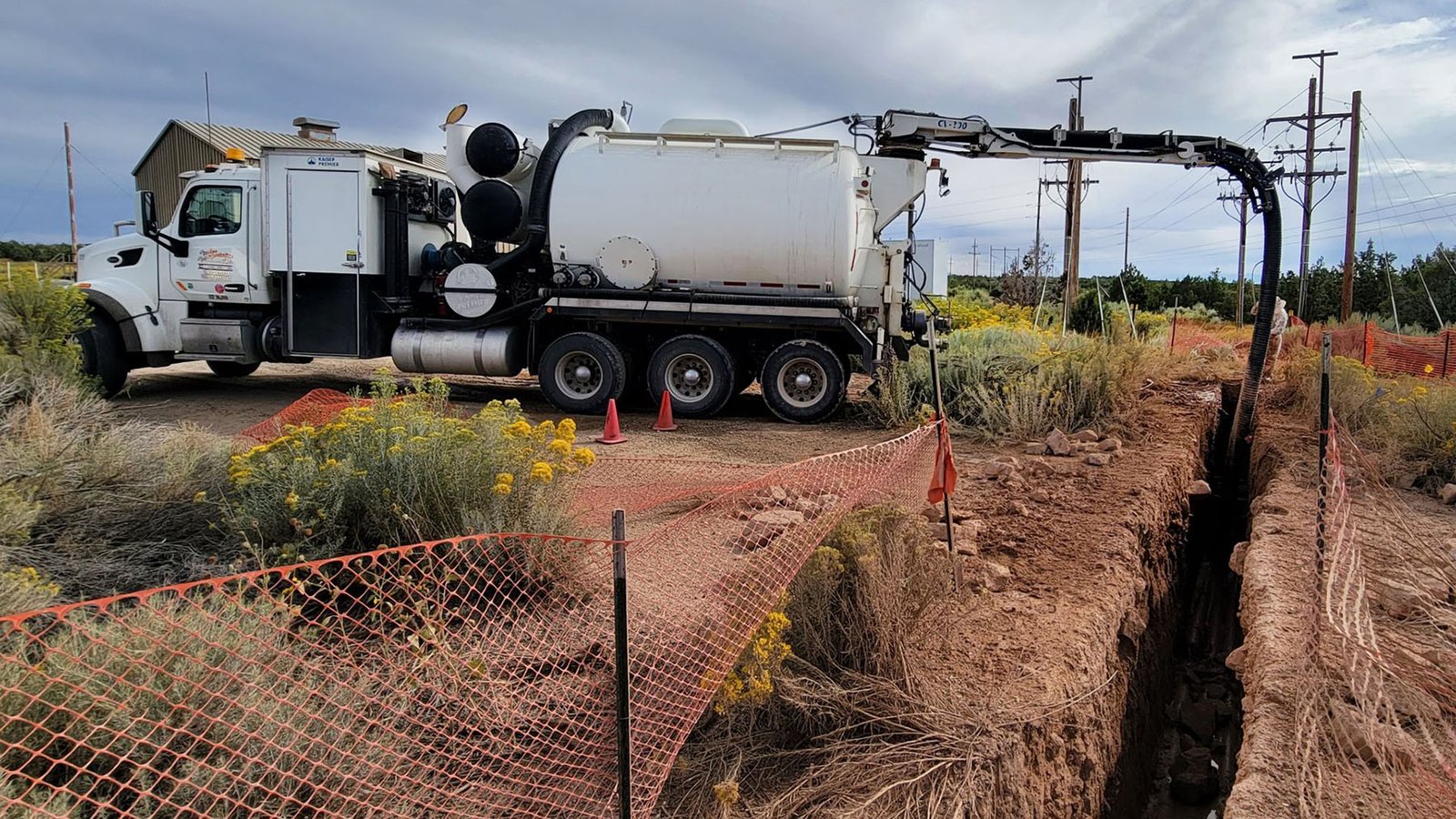
Precision Hydro Excavation Services for Buried Utilities
Hydro excavation is most useful when a project needs controlled digging and clear visibility around existing infrastructure. Pressurized water loosens the soil while the vacuum removes the resulting slurry into the debris tank. Compared with broad mechanical excavation, this allows the crew to work toward a defined target while managing material and protecting access to the surrounding work area.
Common Reno applications include positive utility exposure before excavation or boring, test holes and exploratory digs, slot trenching for utilities and conduit, excavation around valves, hydrants, poles, and existing piping, and localized digging in landscaped, paved, or congested areas. Before mobilizing, we want to know the approximate dimensions and depth, the nearby utilities or structures, and what condition the excavation needs to be left in for the next contractor.
A series of utility exposures can require a very different setup from a narrow trench or a localized excavation beside finished improvements. The same hydrovac truck may handle each task, but hose routing, water use, recovery volume, access, and production can vary substantially. We define the work points and expected result before estimating the job.
How Water and Vacuum Excavation Work Together
The field sequence is planned rather than improvised. We typically review the marked work area and planned excavation dimensions, then position the truck where hose routing and traffic can be managed safely. From there we loosen soil in controlled lifts instead of blindly digging through the full depth and vacuum slurry continuously so the excavation stays visible and manageable. The final step is to confirm the exposed facility and leave the opening ready for the next trade or project phase. Keeping those steps in order helps the operator avoid creating more disturbance than the project requires.
The exact technique changes with the site. A short accessible task may move quickly, while a deeper excavation, long hose run, live drainage line, or congested utility corridor may require slower passes and more frequent checks. The crew should always be able to explain what material is being removed and where it is going.
Quality control during the work is mostly about staying aligned with the target. The operator should be able to pause after loosen soil in controlled lifts instead of blindly digging through the full depth and confirm whether the excavation or cleaning is progressing as expected before continuing to vacuum slurry continuously so the excavation stays visible and manageable. If conditions reveal an unknown utility, structural defect, unsuitable material, or a different problem than the one described, the sensible next step is to stop and discuss it rather than turn a defined scope into uncontrolled extra work.
Utility Exposure Before Mechanical Excavation
Local conditions matter. Reno jobs can move from compacted fill and landscaped commercial sites to native high-desert soil with cobble or rock. Truck access, hose distance, depth, excavation dimensions, water use, and disposal all affect production. Winter freezing, traffic control, steep grades, and limited staging can change how a job is sequenced. Those factors are why a useful estimate starts with project information rather than a one-size-fits-all number.
Safety planning remains part of the job even when hydrovac reduces the amount of mechanical digging. OSHA guidance on hydro-vacuum excavation provides an authoritative reference related to excavation or system maintenance. Project owners and contractors remain responsible for permits, utility locating, traffic control, confined-space procedures, trench protection, and other requirements that apply to their work.
Reno-area conditions can also change during the day. Reno jobs can move from compacted fill and landscaped commercial sites to native high-desert soil with cobble or rock. A site that is dry and open during estimating may have parked equipment, deliveries, snow, standing water, or active traffic when the truck arrives. The site contact should keep the planned staging area available and let us know about changes that affect safe access. That small amount of coordination can save substantial setup time.
Reno Ground Conditions, Access, and Spoil Planning
The largest cost variables are usually number and size of excavations, depth and soil conditions, distance from the truck to the work, water and vacuum time, slurry volume and disposal requirements, and site access and traffic control. Truck time by itself does not tell the whole story. Two jobs with the same nominal depth can be very different if one is beside the truck in loose material and the other requires a long hose run through compacted ground with limited disposal options.
A clear scope helps control cost. Photos, utility plans, line maps, approximate dimensions, and a description of what the crew is expected to leave behind all make scheduling more accurate. If the work is part of a larger construction sequence, let us know which trade follows so the hydrovac portion can be timed to avoid unnecessary standby time.
When comparing estimates, look at what is included. Number and size of excavations, depth and soil conditions, and site access and traffic control may be handled differently from one project to another. An estimate that includes vacuum recovery and disposal is not directly comparable to one that assumes the customer will handle material after it is loosened. We try to state those assumptions so the project team can budget the whole task rather than only the truck at the curb.
Hydro Excavation Pricing and Project Preparation
A well-prepared site makes hydro excavation more productive. Before arrival, complete required utility locating before excavation begins; mark the exact holes or trench alignment the crew needs; and identify gates, height restrictions, soft shoulders, or restricted truck access. It is also helpful to confirm where recovered material can be handled or disposed of and coordinate hydrovac work with the excavator, driller, utility crew, or inspector that follows. These steps reduce surprises and help the crew spend more of the scheduled time doing the actual work.
Call (775) 414-4960 with the location, requested service, approximate scope, and preferred timing. Reno Hydrovac can then confirm what information is still needed and provide a free estimate for hydro excavation in Reno and surrounding Northern Nevada communities.
For multi-point hydro excavation, number each test hole or trench segment on a sketch and include the required depth or dimensions. A clear sequence helps the operator move efficiently and makes it easier for the superintendent or inspector to verify each excavation before the truck moves on.
Related Hydro Excavation Services and Next Steps
Hydro Excavation is often one part of a larger project. Depending on what is uncovered or cleaned, the next step may involve utility potholing, vacuum excavation, or utility trenching. We can coordinate the hydrovac portion with the contractor or facility team so each service has a clear purpose instead of duplicating work.
If you are not sure which service name fits the problem, describe the site and desired outcome rather than guessing. Call (775) 414-4960 or request a free estimate. We can determine whether the work is primarily excavation, utility verification, vacuum removal, jetting, or infrastructure cleaning and scope it accordingly.
Frequently Asked Questions About Hydro Excavation
When is hydro excavation a better choice than mechanical digging?
Hydro excavation is most useful when the work needs precision around existing utilities, a smaller excavation footprint, or controlled removal in a congested area. Mechanical equipment can still be more efficient for large-volume open excavation. The right approach depends on the target, soil, access, and what has to happen after the excavation is complete.
Do utilities need to be marked before hydro excavation begins?
Yes. Required utility locating should be completed before excavation begins, and the project team should identify the exact exposure or test-hole locations. Hydro excavation helps physically verify a marked facility, but it does not replace the locate process. For targeted verification work, see our utility potholing service.
What happens to the soil and slurry removed during hydro excavation?
The loosened material is vacuumed into the truck debris tank as work progresses. Disposal depends on the material, volume, and project requirements. Known contamination, petroleum, process waste, or unusual material should be identified before scheduling so the recovery and disposal plan can be discussed in advance.
What information helps you quote a hydro excavation project?
Send the project address, approximate depth and dimensions, number of work points, access photos, utility information, plan sheets when available, and the desired schedule. If the work includes a narrow continuous excavation, dimensions for the proposed utility trench are especially helpful.