UTILITY TRENCHING RENO, NV
Utility Trenching in Reno, NV
Hydrovac utility trenching and slot trench excavation for precise utility installation, crossings, tie-ins, and work around existing underground facilities.
- Licensed & Insured
- Locally Owned
- Serving Since 2016
Get Your Free Quote
By submitting this form, you agree to our Terms of Use including consent to receive calls regarding your free estimate.
Confidential · We respond within one business day
Home › Utility Trenching
Reno Hydrovac handles utility trenching as a construction and infrastructure service, not as a generic one-line item. The method uses controlled hydro excavation to create narrow excavations where precision matters more than bulk production, while can support short utility runs, crossings, conduit work, tie-ins, and sections of trench that pass through congested infrastructure. Just as important, it is often used in combination with mechanical excavation, with hydrovac handling the sensitive portions and conventional equipment handling open ground. That combination makes the service useful when the project has a specific target, limited access, or a need to keep material contained.
Requests range from slot trenches for conduit or small utilities, crossings through marked utility corridors, tie-in excavation to trench sections beside existing lines, daylighted transitions before mechanical trenching resumes, localized trenching in paved or restricted areas. Depending on the scope, the same mobilization may also include hydro excavation, utility potholing, or vacuum excavation. We separate those tasks in the estimate so the customer understands what is actually being performed.
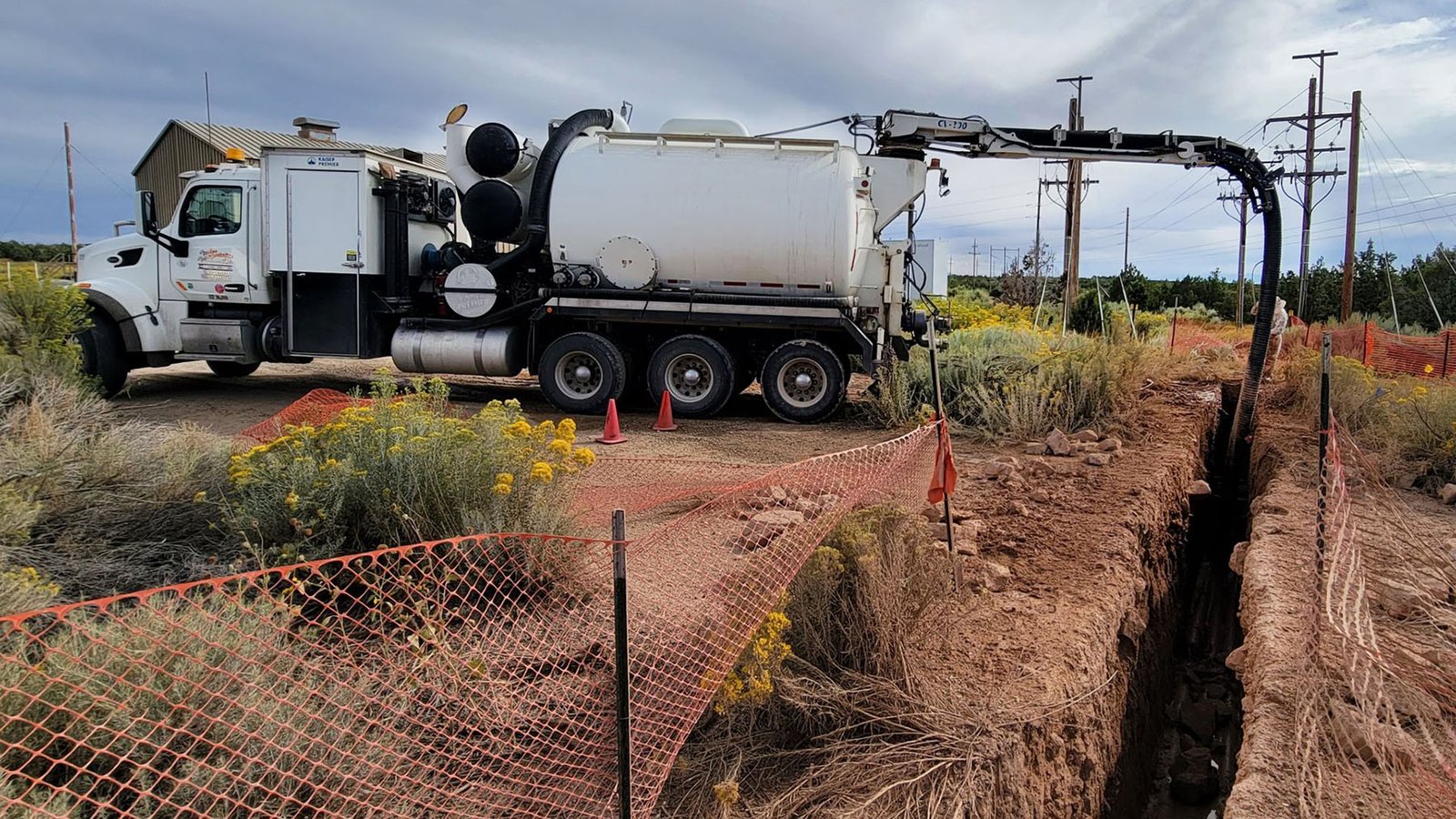
Hydrovac Utility Trenching for Precise Installation Work
Utility trenching with hydro excavation is useful when a narrow, controlled excavation is more important than bulk production. Pressurized water and vacuum recovery can create targeted trench sections while giving the operator better visibility around known underground infrastructure. This can be valuable where existing utilities, pavement, landscaping, or limited access make a broad mechanical approach impractical.
Common applications include slot trenches for conduit or small utilities, crossings through marked utility corridors, tie-in excavation, trench sections beside existing lines, daylighted transitions before mechanical trenching resumes, and localized trenching in paved or restricted areas. Some scopes are short precision cuts, while others support a larger utility or civil project.
Utility trenching production is driven by the required trench dimensions and what surrounds the alignment. A short slot trench in open ground is different from a crossing through congested utilities or finished pavement, so depth, length, hose routing, recovery volume, and the next construction phase should be defined before mobilization.
Slot Trenches, Crossings, and Short Utility Runs
Field work generally follows a deliberate sequence. First we review the trench alignment and required dimensions. The truck is then set up so we can complete utility locating and pothole critical crossings first. The operator excavate in controlled lifts while maintaining visibility of existing facilities, followed by vacuum slurry continuously to keep the trench workable. Once the target condition is reached, we coordinate trench protection, access, installation, and backfill responsibilities with the project team.
The process may sound straightforward, but efficiency depends on details such as hose routing, water supply, line access, material consistency, safe staging, and communication with the other crews. Those are the details we try to resolve before the truck is committed.
Quality control during the work is mostly about staying aligned with the target. The operator should be able to pause after excavate in controlled lifts while maintaining visibility of existing facilities and confirm whether the excavation or cleaning is progressing as expected before continuing to vacuum slurry continuously to keep the trench workable. If conditions reveal an unknown utility, structural defect, unsuitable material, or a different problem than the one described, the sensible next step is to stop and discuss it rather than turn a defined scope into uncontrolled extra work.
Trenching Around Existing Underground Facilities
A narrow hydrovac trench is still an excavation and must be planned with the same attention to worker access and protective systems when personnel may enter. Reno soil, cobble, pavement thickness, depth, and hose distance affect production. Slurry management is different from dry spoil and should be addressed before excavation begins. These Reno-area conditions can affect production even when the actual excavation or cleaning target is small.
We also plan around the applicable safety and maintenance requirements. OSHA trenching and excavation resources is a useful official reference for this type of work. It should be read together with the project plans, local permit conditions, utility requirements, and the controlling contractor’s safety program.
Reno-area conditions can also change during the day. A narrow hydrovac trench is still an excavation and must be planned with the same attention to worker access and protective systems when personnel may enter. A site that is dry and open during estimating may have parked equipment, deliveries, snow, standing water, or active traffic when the truck arrives. The site contact should keep the planned staging area available and let us know about changes that affect safe access. That small amount of coordination can save substantial setup time.
Excavation Safety, Access, and Spoil Management
A quote for utility trenching considers trench length, width, and depth, number of utility crossings, soil and surface conditions, truck access and hose reach, water use, slurry volume and disposal, and coordination with installation crews. The service is therefore difficult to price accurately from a single photo or a line like ‘one hole’ or ‘one drain’ without dimensions and access information.
We can usually narrow the estimate quickly when the caller has measurements, site photos, utility marks, line maps, or a plan sheet. If the scope is uncertain because the problem is underground, we can define an initial task and explain what conditions would justify additional work.
When comparing estimates, look at what is included. Trench length, width, and depth, number of utility crossings, and coordination with installation crews may be handled differently from one project to another. An estimate that includes vacuum recovery and disposal is not directly comparable to one that assumes the customer will handle material after it is loosened. We try to state those assumptions so the project team can budget the whole task rather than only the truck at the curb.
Utility Trenching Cost and Project Coordination
Preparation is simple but important: provide trench dimensions and alignment; complete utility locates and identify private utilities; confirm whether workers will need to enter the excavation; plan backfill and surface restoration; and sequence the hydrovac so the installation crew can follow without leaving unnecessary open excavation. The more of that information is resolved before mobilization, the easier it is to keep the hydrovac work aligned with the larger schedule.
Call (775) 414-4960 to discuss utility trenching in Reno, Sparks, Carson City, Fernley, and surrounding service areas. We provide free estimates and can coordinate with contractors, utilities, facility teams, and property managers.
For longer or multi-segment trenches, provide the alignment, target depth, and required width for each section. A clear sequence lets the installation crew follow the hydrovac work efficiently and reduces the amount of open excavation left waiting between phases.
Related Utility Trenching Services and Next Steps
Utility Trenching is often one part of a larger project. Depending on what is uncovered or cleaned, the next step may involve hydro excavation, utility potholing, or vacuum excavation. We can coordinate the hydrovac portion with the contractor or facility team so each service has a clear purpose instead of duplicating work.
If you are not sure which service name fits the problem, describe the site and desired outcome rather than guessing. Call (775) 414-4960 or request a free estimate. We can determine whether the work is primarily excavation, utility verification, vacuum removal, jetting, or infrastructure cleaning and scope it accordingly.
Frequently Asked Questions About Utility Trenching
What types of utility trenches can be excavated with hydrovac?
Hydrovac can be used for narrow trench sections, conduit routes, crossings, tie-ins, utility connections, and other controlled excavation where existing infrastructure or limited space makes precision important. It is not always the most efficient method for long open trenches with no utility conflicts.
What trench dimensions do you need for an estimate?
Provide the approximate length, width, depth, surface type, and expected material. Also identify existing utilities, access restrictions, and whether the trench has to be ready for installation, inspection, or another trade immediately after excavation. Dimensions make the scope much more useful than a general request for trenching.
Can hydrovac trench through pavement?
The excavation method can remove material beneath paved areas once appropriate surface access has been created, but hydrovac is not a replacement for saw cutting or pavement restoration. The project team should define who is handling surface removal and repair before the trenching scope is scheduled.
Should utilities be pothole-verified before trenching?
Where existing utilities cross or run close to the proposed trench, positive exposure can give the project team better information before continuous excavation begins. Our utility potholing service can be used to verify critical crossings before the trench scope proceeds.